
Happy Tunes - Earn & Play
FortuneView DeveloperMusic & Audio
4.329.00 Reviews
- Version
- 1.0.1
- Installs
- 100.00K
- Age Rating
- Everyone
Screenshots
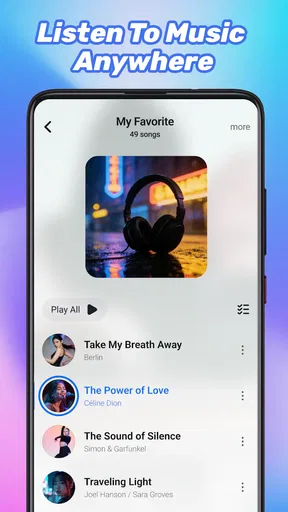
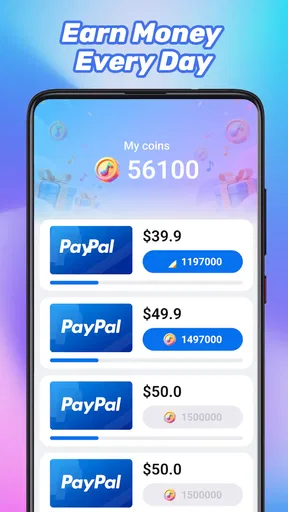
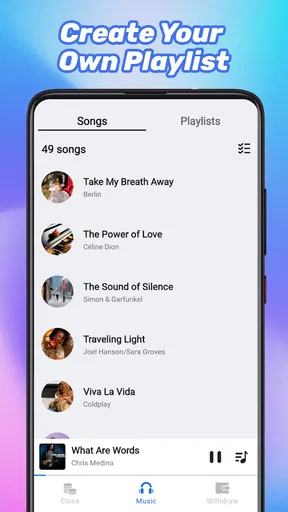
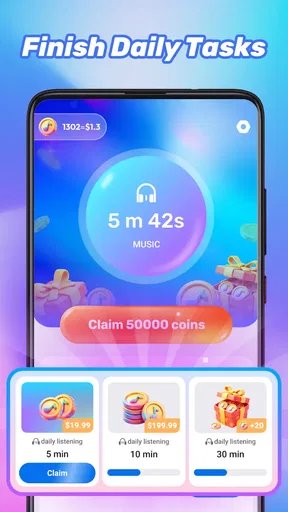
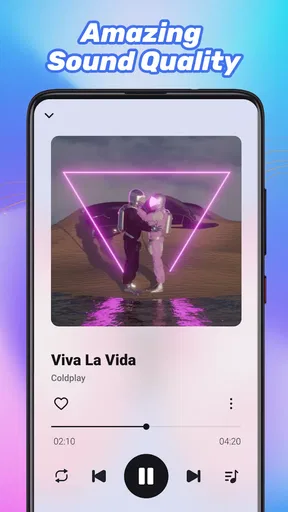
Our Review of Happy Tunes - Earn & Play
 Analysis by Appyee
I approached Happy Tunes - Earn & Play as a small, straightforward music and audio app rather than expecting a complete replacement for a major streaming platform. Its promise is easy to understand: keep music close at hand and make listening feel light and accessible. After spending time with it, my impression is that its biggest appeal is its low barrier to entry. It is free, aimed at Everyone, and runs on Android 7.0 or later, so it can suit people using older phones as well as those who simply want a simple way to explore audio.
That simplicity is also the key to judging it fairly. I would not recommend it to someone who needs a deep music library, advanced playback controls, or a carefully organized long-term collection. I would recommend giving it a look if you want an uncomplicated listening companion and prefer trying an app without paying first. The experience feels best when expectations stay modest and the goal is casual listening rather than building an entire music system around one app.
What Happy Tunes offers and where it fits
The app belongs to the Music & Audio category and comes from FortuneView Developer. Its current version is 1.0.1, which gives the product a relatively early-stage feel. That does not automatically make it a poor choice, but it does affect how I evaluate it: I pay more attention to clarity, everyday usefulness, and whether the basic experience is pleasant enough to return to.
The store summary presents the idea of taking music with you wherever you go, while the short description calls it “Happy Tunes.” I read that as a focus on convenient, upbeat listening rather than a specialist tool for musicians, DJs, or serious audio collectors. In practical terms, the app makes more sense as something you open for a quick listening session than as the central place for every track, playlist, and audio habit you have.
The app has an average rating of 4.3 from around 700 ratings, with 29 written reviews, and it has passed the 100K+ install mark. Those figures suggest that it has found a real audience, although they should not be treated as proof that it will suit every listener. A rating is useful for spotting general satisfaction, but music apps are especially personal: one person wants instant casual playback, while another expects synchronized libraries, downloads, discovery tools, and precise control.
The cost question is refreshingly simple
Happy Tunes is free. That is the clearest part of its value proposition, and it changes how I judge the app. You can try it without making a purchase decision first, so the sensible approach is to install it, test the basic listening flow, and decide whether it earns a place on your phone. I would not describe it as a bargain in the same way I would describe a discounted paid app, because there is no purchase price to compare with a premium feature set. Its value comes from what it lets you do without an upfront charge.
For readers who are careful about spending, this makes the app low-risk. It can be useful on a secondary phone, for a family member who wants something uncomplicated, or for anyone who is tired of installing paid tools before knowing whether the interface feels comfortable. At the same time, “free” should not be confused with “complete.” The right question is not whether it costs money, but whether its available experience covers your particular listening routine.
The age rating is Everyone, which supports its broad, approachable positioning. I still would not hand any app to a child without checking the device and the surrounding content myself, but the rating makes the intended audience clear. It is not presented as a niche product for professionals or a mature-content entertainment service.
How it works in an ordinary day
Imagine leaving home for a short walk with an older Android phone that has limited storage and no interest in complicated setup. You want something cheerful playing in the background while you walk to a shop, tidy a room, or take a break from work. This is the kind of situation where Happy Tunes can make sense. The main advantage is not that it transforms listening; it is that a free, lightweight-feeling music app can be easier to try than a larger service that brings along many menus and account decisions.
My practical advice is to judge the first few minutes by the number of steps between opening the app and hearing something you actually want. If that path feels direct, the app has done its main job for casual use. If you find yourself searching for controls, wondering where your listening choices are stored, or repeatedly adjusting the same settings, the convenience advantage disappears quickly.
Another useful scenario is a spare device used in a kitchen, workshop, or shared room. In that setting, people often need dependable casual audio rather than a personal library with elaborate organization. A free app can be a sensible experiment for that role. I would keep the phone’s battery, storage, and network situation in mind, however, because music habits can expose limitations that are not obvious during a quick test.
What value you receive for free
The strongest value is access without financial commitment. That matters for listeners who are comparing several music apps, people who do not want another subscription, and users who only need occasional background audio. It is also useful for anyone with an older Android handset, since the minimum operating-system requirement reaches back to Android 7.0.
I see three practical benefits in that combination. First, the app is easy to trial because the price does not create pressure. Second, the broad age rating makes it easier to consider for a mixed household. Third, the modest version number suggests that users can approach it as a focused utility instead of expecting a mature ecosystem with years of accumulated features.
There is a trade-off in that last point. A newer or smaller app may feel less burdened by unnecessary complexity, but it may also lack the refinements people take for granted in established alternatives. I would therefore use Happy Tunes as a focused listening option, not automatically as the only audio app on my phone.
Where it differs from familiar alternatives
Compared with a major streaming service, Happy Tunes is easier to evaluate on its own terms because the financial entry point is free. Large services usually compete through extensive catalogs, recommendations, playlists, cross-device continuity, and polished account-based experiences. Those are meaningful advantages when you listen every day and want your music history and preferences to follow you.
Compared with a local music player, the comparison changes. A local player is often better for someone who already owns audio files and wants direct control over folders, metadata, and offline playback. Happy Tunes is more appealing when you want an app-centered listening experience rather than managing your own collection. If your priority is playing personal files with no distractions, I would look at a dedicated local player first.
Radio-style apps are another alternative. They can be better when you want continuous discovery and do not want to choose every track yourself. Happy Tunes may be preferable when its more direct, casual approach matches your mood. The important distinction is control versus convenience: an app that feels cheerful and immediate may still be the wrong tool for someone who wants exact albums, carefully edited playlists, or detailed audio settings.
Small habits that make the trial more useful
My first tip is to test the app in the place where you genuinely plan to use it, not only while sitting beside a strong home connection. Try it during the walk, commute, or room-cleaning session that represents your normal routine. This reveals whether the app fits your attention span and whether its listening flow feels comfortable when you are not concentrating on the screen.
My second tip is to decide what “take your music with you” means in your case. If you mean quick access to casual listening, the app’s free entry may be enough. If you mean a dependable offline collection for travel, do not assume that a general music app will meet that need. Confirm through your own use whether it supports the exact listening situation you care about before replacing another player.
My third tip is to keep your expectations proportional to the app’s current maturity. Version 1.0.1 is not a reason to dismiss it, but it is a reason to notice friction carefully. During a short trial, pay attention to whether you can recover easily after pausing, switching apps, or returning later. Those small moments matter more than a pleasant first screen because they determine whether the app becomes part of a routine.
A fourth useful habit is to compare it with your current setup rather than with an idealized app. Open Happy Tunes when you would normally use your existing player and ask whether it saves time, offers a more enjoyable route to audio, or simply adds another icon. If it does not improve one of those moments, its free price alone may not justify keeping it installed.
The limitations I would take seriously
The biggest limitation is the uncertainty that comes with choosing a young, focused app over a well-established service. I would be cautious about making it the sole home for an important music collection until it has proven itself in your routine. That is not a claim that it fails; it is a practical distinction between trying a free app and depending on it for every listening need.
I also think the app may disappoint users who measure value through depth. If your ideal experience includes advanced sorting, detailed queue management, extensive personalization, seamless movement between devices, or a large offline library, a simple music app is unlikely to satisfy you fully. In that situation, a mature streaming service or a specialized local player may be worth choosing even if its setup is more involved.
There is also a personal-cost trade-off. A free app saves money, but it can cost time if you repeatedly move between it and another service to fill gaps in your workflow. I would rather use Happy Tunes alongside a stronger tool than force it into a role it was not designed to handle. That approach keeps the free access useful without turning every missing convenience into a daily frustration.
Who should try it first
I would put this app on the shortlist for casual listeners, owners of older Android phones, and people who want to experiment without paying. It may also suit someone setting up a simple shared listening device or looking for an uncomplicated audio option for short sessions. The Everyone rating and Android 7.0 minimum make it accessible to a wide range of users.
It is particularly sensible for a person who does not want to commit to a subscription before understanding their own listening habits. Install it, use it during several ordinary moments, and decide based on whether it feels natural. Because the app is free, this trial can be practical rather than theoretical.
I would skip it, or at least treat it as a secondary option, if music is central to your day and you depend on a carefully managed catalog. Audiophiles, collectors of local files, frequent travelers needing guaranteed offline access, and users who move between several devices will probably be happier with tools built around those priorities. The same applies to anyone who dislikes testing apps that may still be developing their feature set.
My final recommendation
My verdict is positive but deliberately measured: Happy Tunes is worth trying when free, uncomplicated listening is more important than a deep music ecosystem. Its price removes the main barrier to experimentation, its audience is broad, and its positioning is easy to understand. I can see it working well for short everyday sessions, a spare Android device, or a listener who wants to keep things simple.
I would not choose it as an automatic replacement for every established music alternative. The current version and focused identity make it better suited to casual use than demanding workflows. If you need extensive organization, dependable personal-library management, or advanced listening control, another category of app will probably deliver better value, even if it takes more setup or involves a cost.
For everyone else, my advice is straightforward: try it in your real routine, compare the number of steps with the app you already use, and keep it only if it makes listening feel easier. That is where Happy Tunes - Earn & Play has its clearest opportunity. It does not need to do everything to be useful; it needs to make the simple moments of listening pleasant enough that you choose it again.
Verdict
Strengths of Happy Tunes - Earn & Play
- Simple interface makes games and tasks easy to browse.
- Offers multiple ways to earn rewards within one app.
- New users can usually start without a complicated setup.
- Lightweight design runs smoothly on many Android devices.
- Progress tracking helps users monitor points and completed activities.
Limitations of Happy Tunes - Earn & Play
- Reward availability may vary by country or region.
- Some tasks can disappear before you have time to complete them.
- Points may require significant time before reaching redemption limits.
- Frequent ads can interrupt browsing and gameplay.
- Permissions and privacy policies should be reviewed before signing up.
Other Releases by FortuneView Developer
View All
FortuneView - Earn Money
Video Players & Editors4.3
Similar Picks in This Category
View All
YouTube Music
Google LLC4.4

Samsung Music
Samsung Electronics Co., Ltd.3.8

Spotify: Music and Podcasts
Spotify AB4.3

JioSaavn - Music & Podcasts
Saavn Media Limited4.3

Lark Player:Music Player & MP3
Lark Player Studio - Music, MP3 & Video Player4.6

StarMaker: Sing Karaoke Songs
SKYWORK AI PTE. LTD.4.3
Frequently Asked Questions
What is Happy Tunes - Earn & Play, and how does it work?
Happy Tunes - Earn & Play is an entertainment and rewards app that combines casual activities, such as listening to music or completing in-app tasks, with opportunities to collect points. After reaching the required threshold, users may be able to exchange their balance for available rewards. The exact activities, earning rates, and redemption options can vary by location and may change over time.
Is Happy Tunes - Earn & Play free to download and use?
The app is generally available to download without an upfront purchase, but users should review its store listing and in-app terms before getting started. It may include advertising, optional purchases, or other monetization features. A stable internet connection is usually required, and mobile data usage can increase if the app loads frequent advertisements, audio, or other media.
Can users really earn money or gift cards with Happy Tunes - Earn & Play?
The app presents rewards as an incentive for completing eligible activities, but earnings should be viewed as supplementary rather than guaranteed income. The amount a user can collect depends on participation, available offers, regional eligibility, and the current redemption rules. Before spending significant time, check the minimum payout, supported reward methods, processing times, and any restrictions.
What permissions and personal information does the app require?
Before installing Happy Tunes - Earn & Play, review the permissions requested during setup and the developer’s privacy policy. Depending on the features enabled, the app may collect account details, device information, usage data, advertising identifiers, or information connected with reward verification. Avoid granting permissions that seem unrelated, and never provide payment credentials unless the purpose is clearly explained.
What should I do if points, tasks, or rewards are missing?
If your balance does not update or a redemption remains pending, first confirm that the task was completed according to its instructions and that your internet connection was stable. Restart the app, check for updates, and allow the stated processing period to pass. If the issue continues, contact support through the official in-app channel with screenshots and relevant transaction details, while protecting sensitive information.
